Are We True Christians? Do Churches Follow the Bible?

Summary
This page presents a Bible study – not an attack on sincere believers. Many Christians genuinely love God, yet may not realize how far today’s church teachings have drifted from Scripture. By comparing church doctrines directly with the Bible, with clear references, this study invites readers to examine whether today’s Christianity aligns with Jesus’ commands.
According to Scripture, many churches today teach partial truth while neglecting Jesus’ commands. The Bible repeatedly warns against altered or incomplete gospels (Galatians 1:6; Matthew 28:20).
About This Study
This study is not affiliated with any denomination. It is based entirely on the Bible and reflects the teaching of the Father, the Son, and the Holy Spirit. All conclusions are drawn directly from the full context of Scripture, with clear references so readers can examine the evidence for themselves.
Contents
-
The Majority of Christians Today Are Not True Christians – Running Christianity Their Way, Not God’s Way
-
Comparing Christian Leaders: Then and Now
-
Today’s Churches No Longer Follow the Bible – Each Has Carved Out Its Own Bible Niche
-
Protestants
-
Catholics & Orthodox
-
Calvinists
-
Calling All Christians to Be Vigilant
-
Today’s Churches Are Businesses
-
8.1 Still Tithing 10%?
-
-
A Practical, Bible-Based Path Forward for Christian Gathering
-
Closing Notes
1. The Majority of Christians Today Are Not True Christians – Running Christianity Their Way, Not God’s Way
John 14:15
Jesus said: If you love me, keep my commands.
1 John 2:4
The one who says, “I have come to know Him,” and yet doesn’t keep His commands, is a liar, and the truth is not in him.
Jesus gave us specific New Covenant commands. But how many Christians today actually know and follow them?
Much of Christianity today falls into one of these traditions:
-
Praying to Mary and saints for intercession – despite Scripture saying Jesus is the only mediator.
-
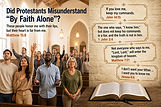
“By faith alone,” interpreted their own way – minimizing or ignoring Jesus’ commands.
-
God already mysteriously chose who will be saved – leaving human response and obedience with little or no role.
All three cannot be right. And when they contradict Scripture, church tradition does not make them right.
1.1 Where Today’s Major Christian Traditions Went Wrong
Catholics: The Bible repeatedly directs prayer to God, not to Mary or dead saints. Jesus is the only mediator between God and mankind (1 Timothy 2:5). Yet the Catholic Church teaches people to seek the intercession of Mary and the saints. This is not a small difference — it changes the biblical way we are told to approach God.
Protestants: "Believing in Jesus" is more than just saying you are saved, singing, and waving your arms in church. Jesus said to keep His commands. Yet many Protestant churches barely teach His commands and parables. That can leave people believing they know Jesus while missing much of what He actually taught. And stop pushing the Old Covenant requirement of 10% tithing as though it were a New Covenant command. See Section 6.1 below for more details.
Calvinists: Your doctrine goes even further, teaching that God already chose who will be saved and that His election is unconditional. But God did not create robots. Scripture repeatedly gives people choices and conditions: pray as Jesus taught, forgive to be forgiven, repent, seek God, and follow Jesus’ commands. God knows the outcome, but His foreknowledge does not mean He makes the decision for us. He foreknows our choices and predestines accordingly. Salvation IS conditional!
★ No wonder Christianity is so divided today. With Christians teaching so many conflicting doctrines, what kind of witness are we presenting to the rest of the world?
After years of attending churches, followed by years of diligently seeking God in the Bible, I realized how far we have drifted. I documented what I found in these two studies:
I’m not selling anything. This is simply out of love for God and for people.
1.2 What gives me the right to say these things?
The Apostle Paul gave this charge in the Bible:
2 Timothy 4:2-4 Paul said:
I give you this charge: Preach the word; be prepared in season and out of season; correct, rebuke and encourage—with great patience and careful instruction. For the time will come when people will not put up with sound doctrine. Instead, to suit their own desires, they will gather around them a great number of teachers to say what their itching ears want to hear.
We have without a doubt reached that time. And that means a call to correct and rebuke false teaching.
Let’s start with the church leaders and theologians of today — the people shaping Christian doctrine and teaching. How well do their teachings and accomplishments compare with the Christian leaders of the Bible? Let’s look.
John 14:12-14 Jesus said:
Very truly I tell you, whoever believes in me will do the works I have been doing, and they will do even greater things than these, because I am going to the Father. And I will do whatever you ask in my name, so that the Father may be glorified in the Son. You may ask me for anything in my name, and I will do it.
If the pope or the most devout Protestant church leader walked into a hospital, could they heal someone in the name of Jesus? Could they put their hand on a child in a wheelchair and make her walk? Yet these are the kinds of leaders shaping doctrines, theology, and what millions of Christians are taught. Never follow church teachings blindly. Test them against Scripture first.
2. Comparing Christian Leaders: Then and Now
2.1 Disciples & Apostles — Then:
-
Preached the Word correctly? Yes
-
Laid their hands on sick people and healed them? Yes
-
Laid their hands on crippled people and made them walk? Yes
-
Brought dead people back to life? (Peter and Paul did!) Yes
-
Spoke in tongues? Yes — but only a few spoke, and interpretation was required.
-
Paul accidentally picked up a venomous snake and it did not harm him.
-
Number of changes in God's realm: 0 (as it should be!)
-
Having dedicated every moment of their lives to this, they were poor and homeless, with barely enough to eat. 💝
2.2 Church Leaders — Today:
-
Preached the Word correctly? No
-
Protestants emphasize being “born again” and “saved by the blood,” while often neglecting Jesus’ commands.
-
Catholics teach people to seek the intercession of Mary and the saints.
-
Calvinists teach that God already chose who will be saved and that His election is unconditional.
-
Speaking in tongues? Whole churches at once, often with no interpretation.
-
-
And the resulting number of miracles performed in the name of Jesus: 0
*None verified. Many claimed; some exposed as staged or fake.
-
Number of dead people brought back to life: 0
-
Number of changes in God’s realm: 2
-
Mary was elevated to “Mother of God” and given a heavenly role far beyond anything stated in Scripture.
-
Purgatory was added as a place of purification after death — a place and process never described in the Bible.
-
-
Any church leaders homeless or hungry? No – they improved considerably on that.
-
Some Protestant ministries strongly push 10% tithing while church leaders become millionaires, some even owning private jets.
-
Catholic churches around the world collect donations – wealth flows upward to the Vatican, which controls enormous assets.
-
★ Each denomination tends to preach from its own side of the Bible – emphasizing verses that support its theology while minimizing or ignoring Scripture that challenges it.
👉🏼 Consider this biblical pattern:
-
Old-Covenant: God established Israel and gave its leaders His commands. Moses faithfully led the people and performed great miracles by God’s power.
Generations later, Israel’s religious leaders had drifted so far that they rejected Jesus, the Messiah they had been waiting for.
-
New-Covenant: Jesus established His church, with Peter and the apostles faithfully leading and performing miracles in His name.
2,000 years later – fill in the blank: __________.
Humans will be humans. God establishes the right path, then over time human complacency, tradition, and corruption take over. We see this pattern throughout the Bible – Noah’s flood, Sodom and Gomorrah, Israel repeatedly turning away from God, and more. Why should we assume today’s churches are any different?
3. Today’s Churches No Longer Follow the Bible – Each Has Carved Out Its Own Bible Niche
★ Paul already rebuked today’s churches because the same drift started in his days:
Galatians 1:6 Paul said:
I am astonished that you are so quickly deserting the one who called you to live in the grace of Christ and are turning to a different gospel.
If they "so quickly deserted the truth" then, how much more now, 2000 years later?!
And it wasn’t an isolated warning. Paul repeatedly confronted churches as they kept drifting from the truth:
1 Timothy 6:2-3 Paul said:
... If anyone teaches otherwise and does not agree to the sound instruction of our Lord Jesus Christ and to godly teaching, they are conceited and understand nothing.
And it wasn't just one or two references from Paul! Several! Here's another one:
2 Corinthians 11:4
For if someone comes to you and preaches a Jesus other than the Jesus we preached, or if you receive a different spirit from the Spirit you received, or a different gospel from the one you accepted, you put up with it easily enough.
★ For Jesus, the “church” is the body of genuine Christian believers, led by Jesus Himself through the Holy Spirit with one interpretation of the Bible – not divided into conflicting doctrines and denominations!
Matthew 16:18
And I tell you, you are Peter, and on this rock I will build my church, and the gates of hell shall not prevail against it.
When Jesus established His church, He built it through Peter and the apostles – Spirit-filled leaders who followed His teaching and demonstrated His power. That was the model for His church. Today’s church leaders neither follow His teaching fully nor demonstrate the power shown by those first leaders. Therefore, one thing we know for sure: Jesus Himself remains the head of the church today – not any pope, pastor, denomination, or earthly organization.
Continued with supporting Bible references here: How to Be True Christians.
And Jesus made another major change clear: worshiping God is no longer tied to a physical place. No temple, church building, or special location is required to worship Him. So churches should stop using “you must assemble” as though it means Christians must attend their church building – especially when the teaching there contradicts Scripture.
John 4:21-24
“Woman,” Jesus replied, “believe me, a time is coming when you will worship the Father neither on this mountain nor in Jerusalem... Yet a time is coming and has now come when the true worshipers will worship the Father in the Spirit and in truth, for they are the kind of worshipers the Father seeks. God is spirit, and his worshipers must worship in the Spirit and in truth.”
“In the Spirit and in truth” – not dependent on a church building or denomination.
Matthew 10:16 I am sending you out like sheep among wolves. Therefore be as shrewd as snakes and as innocent as doves.
★ Yes, Christians are called to be loving and kind. But Jesus also told us to be “shrewd as snakes.” When God’s Word is being distorted, we should recognize it and speak up.
The Deficiencies in Church Denominations
This section focuses on the three largest Christian traditions: Protestant, Catholic & Orthodox, and Calvinist. Smaller denominations and movements are not covered here, but many have developed their own traditions and doctrines that also conflict with Scripture.
4. Protestants
(Including Baptists, Evangelicals, Pentecostals, etc.)
I listened to Charles Stanley’s weekly sermons for 30 years, and Chuck Swindoll’s for a number of years. The parts of the Bible they preached, they preached very, very well. But the parts that challenged their theology were rarely, if ever, addressed. They preached from one side of the Bible – the side that supported their version of “by faith alone” – while largely ignoring the other side.
4.1 Saved, nothing else to do?
The Bible is full of verses and parables about spiritual growth, yet many Protestant churches barely teach them. Instead, the message can become: get saved, believe, and you're done. But Jesus repeatedly taught about growing spiritually, obeying His commands, and remaining faithful. Salvation is not a “do nothing” message.
See my study By Faith Alone? for more.
4.2 Impossible to become unsaved?
Protestant churches spend whole sermons teaching “once saved, always saved,” while often overlooking Jesus’ warnings about becoming rejected if we fail to grow spiritually. Examples include John 15:6 "branches that wither and die", Luke 13:6 "cut the fig tree down", and Matthew 25:30 "cast the worthless servant into the outer darkness."
See my study What Does "Believe in Jesus" Really Mean? for more Bible references.
4.3 By Faith Alone?
Paul introduced Jesus to the Gentiles. But Protestants took that introduction and turned it into the complete message. The Protestant version of “by faith alone” is very different from the Bible’s “by faith alone.” Biblical faith is not merely believing and lip-declaring yourself saved – it means following Jesus, learning His commands, and keeping them.
One example is the Lord’s Prayer, which Jesus gave His followers to pray. See my study By Faith Alone? for the full biblical explanation.
4.4 Refuse to pray the Lord's Prayer!
The key part of God’s New Covenant! Protestant churches rarely pray the Lord’s Prayer in their services and generally do not encourage Christians to pray it daily as Jesus taught. Why? Four common reasons: (1) Catholics pray this prayer; (2) praying it daily is viewed as repetitive “works,” conflicting with their version of “by faith alone”; (3) their theologians teach that Jesus intended it primarily for the Jews; and (4) many treat it merely as a template for prayer, largely because they miss its deeper scriptural meaning.
But you stopped seeking God in the Bible! Go back and look. You messed up big on this one. It is one New Covenant from God, not two – not one for Jews and another for Gentiles.
You cannot simply claim to be “covered by the blood” or “saved by grace” while ignoring what Jesus commanded. We need the Bread of Life daily, along with the repentance and forgiveness Jesus built into the Lord’s Prayer.
See my page The Lord's Prayer is Severely Misunderstood for eye-opening Bible references.
4.5 Pentecostals?
Pentecostals are Protestants with the same version of “by faith alone,” but with much more emphasis on energy, charisma, speaking in tongues, and visible manifestations of the Spirit. But making a lot of noise, jumping up and down, and waving arms does not prove the Holy Spirit is present. It is not a sports game. The Holy Spirit is given by God to those who obey Him:
Acts 5:32 ...the Holy Spirit, whom God has given to those who obey Him.
This clearly means not jumping up and down, not faking speaking in tongues, and not faking miracles! It means first learning Jesus’ commands and keeping them. If you truly know Jesus’ commands, you wouldn’t be doing this. I don’t say this to criticize everybody. I say it to make those who genuinely care look closer at the Bible. Don’t just follow the charismatic crowd.
See my study article, Speaking in Tongues?
4.6 Must tithe the whole 10%?
Protestant churches will spend a whole sermon on tithing, digging up verses all the way back from Leviticus and making sure people tithe the full 10% of their income – not 9% or 8%, because “they’d be stealing from God.” But the Lord’s Prayer? “Jesus meant that for the Jews.”
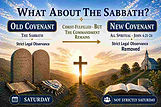
When in fact, the 10% amount of tithing was the one meant for the Jews, based on their 11-to-1 tribal structure: Hebrews 7:5 Now the law requires the descendants of Levi who become priests to collect a tenth from the people—that is, from their fellow Israelites. Tithing 10% is "works of the law" that Jesus nailed to the cross. Paul’s New Covenant teaching was instead to give willingly and cheerfully – not a mandatory 10%. Philippians 4:16-18. See Section 8.1 below on Still Tithing 10%?
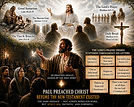
4.7 Following Paul for Gentiles While Minimizing Jesus’ Teaching
Ignoring Jesus’ teaching, and the fact that God gave us one New Covenant, not two! Protestants often brush off apparent differences between Jesus’ message and Paul’s with explanations like: “Jesus meant that for the Jews; Paul’s message was for the Gentiles who became Christians later.” This is dangerous on so many levels – it minimizes Jesus’ teaching and causes people to miss major parts of the New Covenant.
Romans 10:12
For there is no difference between Jew and Gentile—the same Lord is Lord of all and richly blesses all who call on him.
Matthew 28:17-20
... Then Jesus came to them and said, “All authority in heaven and on earth has been given to Me. Therefore go and make disciples of all nations, baptizing them in the name of the Father, and of the Son, and of the Holy Spirit, and teaching them to obey everything I have commanded you...”
Notes: This clearly says, “teach all nations to obey EVERYTHING Jesus commanded His Jewish disciples.” Any church teaching that Jesus’ commands were only for the Jews has a serious problem with this verse. Jesus is GOD! His teachings are for all people, not just the Jews. Paul’s teaching to the Gentiles did not replace Jesus’ teaching – Paul pointed people to Jesus.
Any apparent difference between Paul’s and Jesus’ messages means we should look to Jesus’ teaching for the full picture – not use Paul to dismiss what Jesus commanded. See my page on Jesus for Jews & Paul for Gentiles?
4.8 Giant Screens & Loud Music, But No Seeking of God
The focus shifted to big screens, loud music, and waving of hands, when instead it should be on seeking God and His kingdom. Even if we spent every moment of our lives seeking God in Scripture, we’d only tap into a tiny fraction of God’s ways and personality. But churches went with what pleases people! Sermons keep rotating through the same simple, safe, and unoffending subjects – with little preaching on Jesus’ parables that challenge their theology, or on subjects that might upset people and lose donations.
Related Bible Studies:
Why didn't Paul Preach the Lord's Prayer?
What Does "Believe in Jesus" Really Mean According to the Bible (Not Church Tradition)
5. Catholic & Orthodox Churches
I grew up Catholic, went to Catholic schools and the rest. So I know Catholicism inside and out, and I could write books on the subject. They got the Nicene Creed right. They pray the Lord’s Prayer in their services, although I believe they miss its true biblical meaning. But beyond these, many Catholic and Orthodox doctrines and traditions are deeply problematic – some, I believe, even blasphemous. Their impressive displays of religious authority can make these teachings appear unquestionably biblical when many are not.
5.1 The root cause of the mess in Catholic & Orthodox churches is this:
They still treat “sin” as the primary measure of our “righteousness,” rather than understanding how God’s New Covenant redemption works. They’re still canonizing supposedly exceptionally “holy” saints, while the message people receive is essentially: minimize your sins to maximize your chances of heaven.
Here's one example verse in the Bible that explains why their thinking is completely unbiblical:
Matthew 5:20 Jesus said: "For I tell you that unless your righteousness exceeds that of the scribes and Pharisees, you will never enter the kingdom of heaven."
The Jewish scribes and Pharisees were regarded as role models of religious righteousness and strict obedience to the law. But Jesus told them it’s not good enough! He specifically said, “you will never enter heaven”! He said we need to exceed that level of righteousness! How do we achieve that? We do by getting renewed day by day through praying the Lord’s Prayer daily. The "righteousness" achieved by receiving the redemptive Bread of life daily, is impossible to achieve any other way! (For how the Eucharist relates to the Lord's Prayer, see Section 8 in The Lord's Prayer is Severely Misunderstood.)
5.2 Canonization of Saints
An unbiblical doctrine. The pope and Catholic Church formally declare certain deceased people to be “saints” after investigating their lives, virtues, and reported miracles. Catholics believe the Church has authority to do this through the authority Jesus gave Peter and the apostles. But did Jesus give Peter authority to create new doctrines and practices not found in Scripture? In the New Testament, ordinary believers in Christ are repeatedly called saints. The Catholic Church turned that biblical term into a special status granted to a select few.
See my post on Quora: Does the Bible Say, Jesus Gave the Authority Only to Peter? Or to All True Believers?
5.3 Pray to saints?
The Catholic Church canonizes saints, and Catholics are taught that they may ask those saints to intercede for them. Some kneel before statues of saints and pray to them. But Scripture repeatedly directs prayer to God, and Jesus is identified as our mediator. Here’s what God said: Exodus 20:4 You shall not make for yourself an image in the form of anything in heaven above or on the earth beneath or in the waters below. You shall not bow down to them or worship them.
The Catholic system places extraordinary emphasis on specially recognized saints, which can make ordinary believers look to them for spiritual help and intercession. But why turn to deceased saints when Scripture identifies Jesus Himself as our mediator? (1 Timothy 2:5) Catholics teach that asking saints to intercede is different from worshiping them, and that Jesus still remains the one mediator. But this raises the biblical question: Where does Scripture tell Christians to pray to deceased believers and ask them to carry our requests to God?
More details on my Quora post here: Intercede vs. Mediate - Clarified According to the Bible
5.4 Mary the Mother of God?!
Do they even know what they’re saying?! Mary is the mother of our Triune God? ...the King of kings and Lord of lords, who alone is immortal and who lives in unapproachable light, whom no one has seen or can see... Timothy 6:15-16. This God?! Mary is the mother of this God?! And God has become a quadrune God?! Mother, Father, Son, and Holy Spirit?! The Bible calls the blessed Mary “the mother of Jesus.” But the Catholic Church pushed Mary’s role far beyond anything Scripture gives her!
And that elevated role doesn’t stop with titles – it carries directly into Catholic prayer and practice. Many Catholics turn to Mary and the saints for help and intercession instead of going directly to God through Jesus Christ. Why? Is Jesus’ sacrifice and intercession not sufficient? Scripture says Jesus is the one mediator between God and mankind. Adding Mary and the saints into that relationship is not the Christianity I see in the Bible.
Matthew 15:8 These people honor Me with their lips, but their hearts are far from Me.
My Catholic relatives keep pressing me to read books about the miracles of Mary. It makes me sad because, to me, it shows just how deeply these traditions have taken hold.
Continued in my page Mary the Mother of God?
5.5 The Lord's Prayer not interpreted right
The Catholic Church does not recognize “the Bread” in the Lord’s Prayer as referring to the “Bread of Life.” Because if it did, that would have major implications for the Catholic Eucharist – believers could receive the Bread of Life directly from God through prayer, without depending on a priest or church ritual. That would greatly diminish the role of priests and bishops in the Catholic system and could severely reduce church attendance. Is the Church looking at this from God’s perspective – or protecting its traditions and structure?
See my study The Lord's Prayer is Severely Misunderstood.
5.6 Purgatory (Catholics only)
Another unbiblical doctrine. Even the Orthodox Church rejects the Catholic doctrine of Purgatory. Catholic teaching describes it as a purification after death for those who die in God’s grace but are not yet ready for heaven. But where is this place or process described in the Bible?
The doctrine relies on interpretations of passages such as 1 John 5:16–17 and Matthew 12:32, along with other writings. But none of these passages actually describes a place called Purgatory or a temporary purification after death.
See my study Purgatory? for the detailed Bible references.
5.7 Confessions!
Catholics confess their sins to a priest, who then assigns a penance – often prayers or other acts. But why is a priest placed in the middle of our forgiveness? Jesus taught us to go directly to God for forgiveness. In the Lord’s Prayer, He gave the conditions: repent and forgive others. No priest, no assigned penalty, and no repeated Hail Marys are required.
Why complicate what Jesus made so direct?
5.8 Little to no spiritual growing
Many Catholics do not deeply study the Bible for themselves – instead, they rely on priests and Church teaching. And priests have many responsibilities beyond studying Scripture, often functioning almost like social workers for their parishes. The result is a system where people can spend their whole lives attending Mass without ever seriously seeking God for themselves in the Bible.
The typical Catholic Mass includes Scripture readings, but the homily often becomes a simple message about being good, loving, and kind. Those things are important – but where is the deeper teaching of Jesus’ commands, His difficult parables, and the need to keep seeking God and growing spiritually?
5.9 No Seeking of God as Jesus Commanded
People don't read the Bible - instead they look to the priests. And the Priests don't read the Bible - A church priest behaves more like a social worker - he doesn't have time to read the Bible. He learned it in theology school? No, all he learned there was about how to run a Catholic mass. If people have difficult Bible questions, they usually ask the priest. And the priest usually does not know. Because all he knows is what to do in the repetitive activities of sermons. The usual Catholic sermon Bible reading time is nice stories from the New Testament. Followed by a message from the priest about "let's all be good and nice".
5.10 The Vatican – A hierarchy of people with glittery costumes and props
They seem more concerned with hierarchy, titles, ceremony, and appearance than with substance – much like the old Jewish establishment Jesus confronted. Instead, they should be spending their time seeking God in Scripture and revisiting their doctrines to see if, just in case... **just in case they got some of them wrong!** But no. Like the other churches, they created their niche and traditions, and keep marching forward with them.
Related Bible Studies:
The Lord's Prayer is Severely Misunderstood
6. Calvinists
(Including Reformed, Presbyterian, etc.)
Watch out and be on your guard for the yeast of the Calvinists. So I reused Jesus’ words here (as in Matthew 16:6). I'm sure Jesus won't mind.
I listened to R.C. Sproul's sermon for a couple of years and read one of the Calvinist books. So, I am qualified to say a few things about Calvinists:
The true message of the Bible, which Calvinists missed, is this:
Before the cross, God chose from the Jewish people to clear the way for Jesus to come and accomplish salvation – they were the “elect.” After the cross, people develop faith by hearing the Word – these are the “predestined,” whom God foreknew and predestined accordingly.
For those unfamiliar with this subject, here’s a quick summary. Christianity today can be divided in many ways, including by denomination. But at a higher level, there is a major fork in the road over free will:
-
Calvinist: God predestined us for His mysterious reasons, before creation. We have no say. > Calvinist churches.
-
Arminian: We have the free will to accept God’s grace or reject it. The choice is ours. > All other churches, Protestants & Catholics.
I actually do believe in predestination based on God’s foreknowledge as described in the Bible. But not the Calvinist version of “mysterious” predestination, which I believe conflicts with Bible teaching. More on this here: Are Calvinist, Presbyterian, Reformed, Biblical?
6.1 Calvinist Doctrine Summary:
Based on some Bible verses containing words such as “elect” and “predestined,” along with a few others they interpret similarly, Calvinists built a whole doctrine around God choosing who will be saved for His own mysterious reasons. But this interpretation ignores the many other verses showing people responding to God, making choices, obeying, repenting, forgiving, and being held responsible for those choices.
The result is a doctrine in which God ultimately decides who will be saved before they are born, regardless of anything they later choose to do. That makes people little more than robots – the complete opposite of the God revealed throughout the Bible.
The Calvinist doctrine is limited by human thinking about time. God is not confined to our space-time continuum.
★ God is "I Am". There is no "before" and "after" for God; infinity past & future are always "now" for Him. What you do now in your life determines your predestination status. Example, do you know Jesus' commands? Are you keeping them?
Romans 8:29 For those God foreknew he also predestined to be conformed to the image of his Son.
God foreknew first, predestined second! I am very sad for the people following the Calvinist and reformed churches. They are so misled.
6.2 Do nothing, God already decided for His mysterious reasons?
Calvinists are even worse than regular Protestants in the “do nothing” message. They take it a step further by telling their members that no matter what they do, God already decided who will be saved and who won’t. And Calvinist teaching can become heavily centered on books and interpretations from “respected” Calvinist theologians, rather than simply reading the Bible without the Calvinist framework already imposed on it.
6.3 God's election decision is Unconditional?!
The Bible is full of conditions! Repent to be forgiven. Forgive others to be forgiven. Obey God to receive the Holy Spirit. Believe in Jesus – which means more than lip-declaring faith; it means knowing Him and keeping His commands.
Calvinists ignore the many Bible statements from Jesus/God saying things like, “if you love me, I will love you back...” and “if you obey my commands, you will be my people...” But “unconditional” is the only way the Calvinist doctrine can hold together. If God’s predestination were conditional, their whole doctrine would crumble.
6.4 Scripture meaning manipulated
They also try to put words in Scripture’s mouth – making it seem that the Bible did not really intend to say “that,” but instead meant “this.” For example, some Calvinist interpretations argue that biblical references to “the whole world” actually mean the world of the elect, not the whole world. I can understand how human error can lead to misinterpretations, but this? I don’t see how their church members can swallow it!
Sometimes even straightforward biblical language gets reinterpreted to make it fit the Calvinist framework, rather than allowing Scripture to challenge the framework itself.
6.5 TULIP?
We cannot reduce God to an acronym! We have to keep seeking Him and maturing! TULIP was introduced as a summary of Calvinist doctrine, and today it has become a framework through which many Calvinists interpret the Bible. Then “respected” Calvinist authors write book after book explaining Scripture through that same framework. They painted themselves into a corner and made the Bible fit TULIP, when it should have been the other way around!
Let’s examine TULIP:
Let's examine the TULIP: Total Depravity, Unconditional Election, Limited Atonement, Irresistible Grace, Perseverance of the Saints.
- Irresistible grace and Perseverance of the saints – God’s grace and His desire to preserve believers are biblical themes, but Calvinism restricts them to a selectively chosen “elect.”
- Limited atonement?! There are thousands of statements in the Bible from God and Jesus directed to “whoever,” “the world,” etc. You want to twist all of these to fit your TULIP?!
- Unconditional Election?! This is where TULIP really falls apart. Calvinism says God’s choice of who will be saved is unconditional. But did anyone check with the Bible before putting a “U” in TULIP?! There are countless verses showing conditions in our relationship with God. “Antichristian” would have been a better choice than “Unconditional”! The acronym should have been TALIP.
Here is just one key condition directly from Jesus Christ: For IF you forgive other people when they trespass against you, your heavenly Father will also forgive you. But IF you do not forgive others their trespasses, your Father will not forgive your sins, Matthew 6:14-15.
You can TULIP yourself all you want – if you refuse to forgive others, Jesus says the Father will not forgive your sins. And unforgiven sin is hardly a picture of someone unconditionally saved.
★ Calvinist church members are good people! But they are being misled by their church doctrine. You cannot simply assume you are predestined because Calvinism says you are. Are you following Jesus’ commands right now? Drop the TULIP framework, learn Jesus’ commands, and keep them. Then you can understand predestination the way the Bible actually presents it.
Related Bible Study
Calvinist, Presbyterian, Reformed, Biblical?
Last updated: August 21, 2026
No ads. No donations. Just Scripture.
If you like this content, please forward the link to your family, friends, and to your church. Or to your favorite influencer. Help spread the correct word of God!